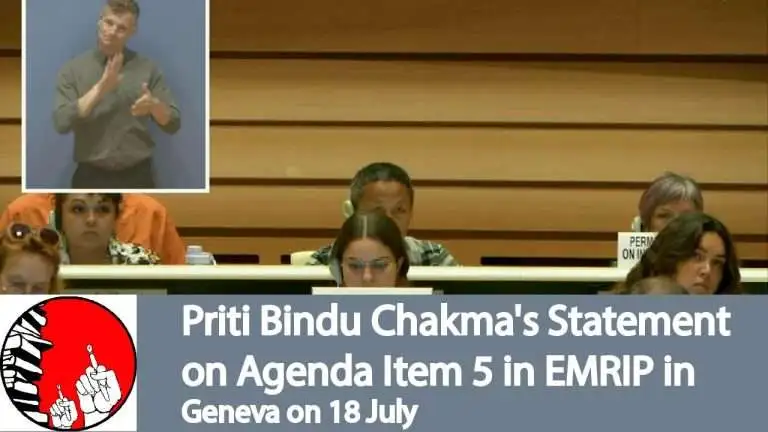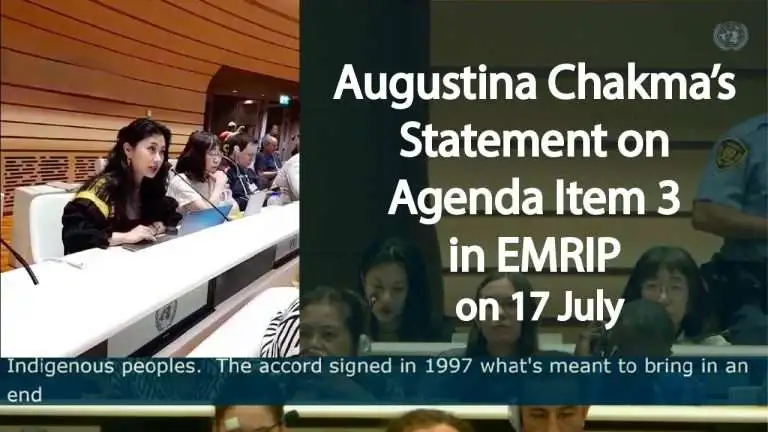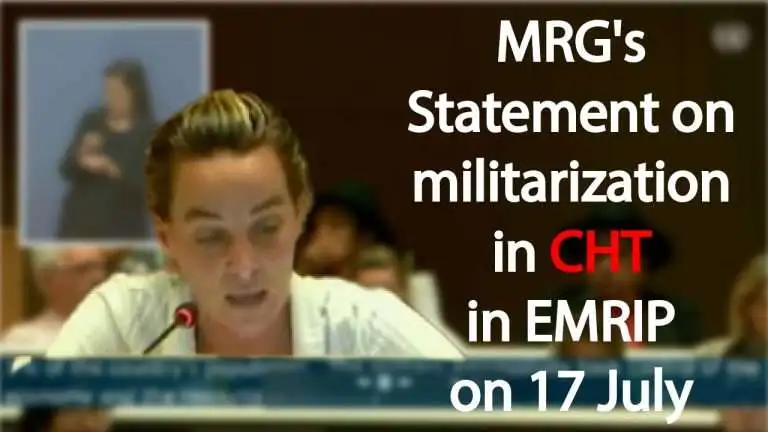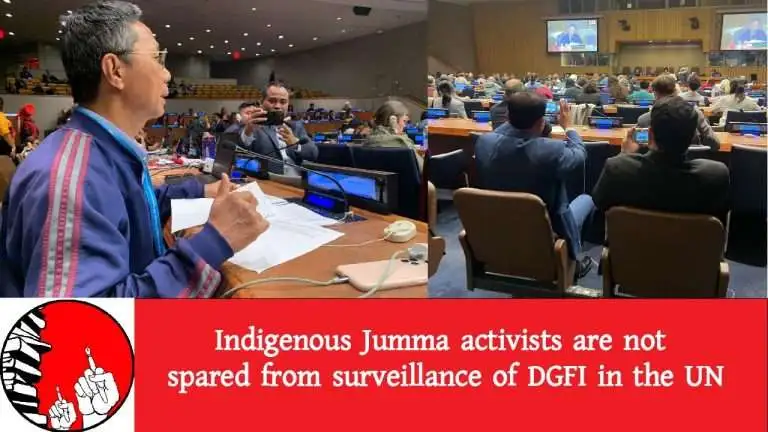


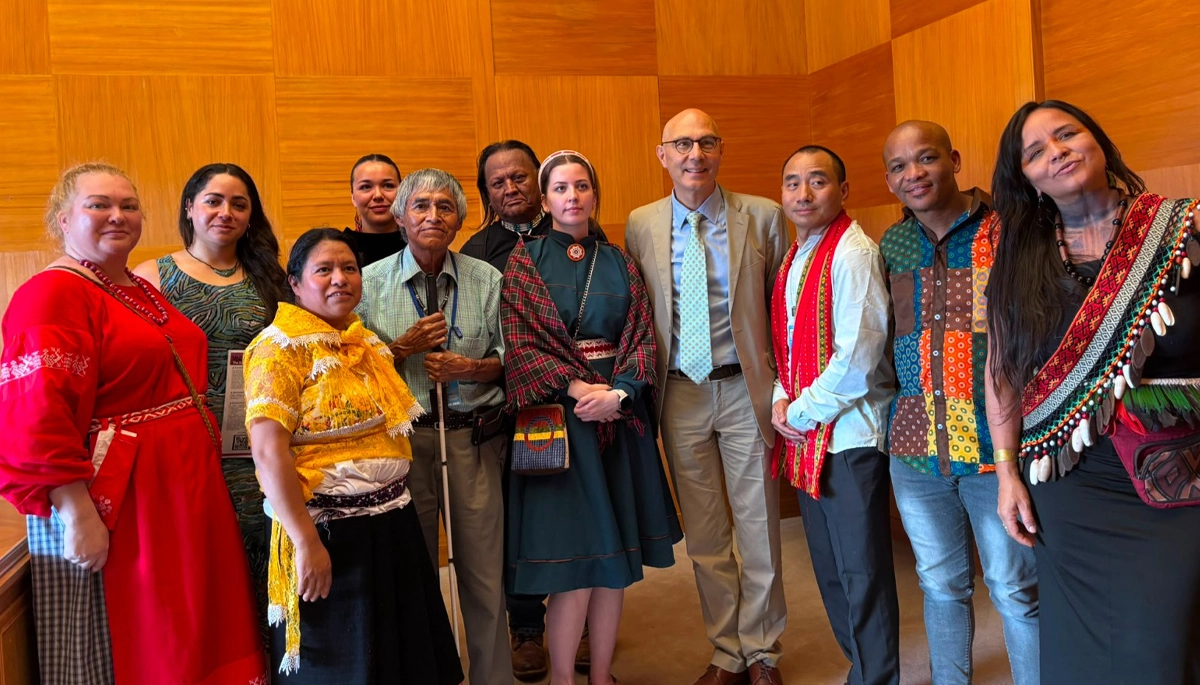
Hill Voice, 17 July 2026, International Desk: “Peace agreements between governments and Indigenous Peoples, like Chittagong Hill Tracts Accord of 1997, often remain unimplemented” says Binota Moy Dhamai, former expert of Expert Mechanism on the Rights of Indigenous Peoples (EMRIP), while meeting with the United Nations High Commissioner for Human Rights, Volker Türk, on Thursday (16 July) at Palais des Nations in Geneva.
Mr. Dhamai expressed this view while delivering a statement on behalf of the Indigenous Peoples of the Asia socio-cultural region on Thursday. This high level meeting between the Global Indigenous Caucus and the UN High Commissioner for Human Rights took place during the 19th session of the EMRIP convening from 13 July to 17 July. The Global Indigenous Caucus led by Binota Moy Dhamai has met with the High Commissioner.
In his statement, he said that the principal challenge facing Indigenous Peoples in Asia is the convergence of multiple crises—including militarisation, climate change, extractivism, biodiversity conservation measures, shrinking civic space, and digital transformation—which collectively undermine Indigenous traditional governance and the exercise of our right to self-determination.
Asia region, Indigenous peoples continue to face militarisation, land dispossession, restrictions on freedom of movement, heightened surveillance, and the criminalisation of Indigenous leaders and activists. These pressures weaken Indigenous Peoples’ traditional and customary governance systems and increase risks of violence, particularly against Indigenous women, girls, and human rights defenders.
Indigenous human rights defenders are increasingly subjected to arbitrary arrest, strategic litigation, misuse of anti-terror laws, and digital surveillance. Environmental defenders remain among the most at-risk human rights defenders globally due to their efforts to protect Indigenous lands, territories, and resources.
On behalf of the Indigenous Peoples of the Asia socio-cultural region Mr. Dhamai urged Office of the High Commissioner for Human Rights (OHCHR) to strengthen its attention to the protection of Indigenous human rights defenders, including safeguarding civic space, preventing reprisals, and ensuring accountability for violations against Indigenous leaders, elders, and communities.
He also called for greater and more meaningful participation of Indigenous Peoples from Asia in United Nations processes so that our regional perspectives can better inform global policymaking.
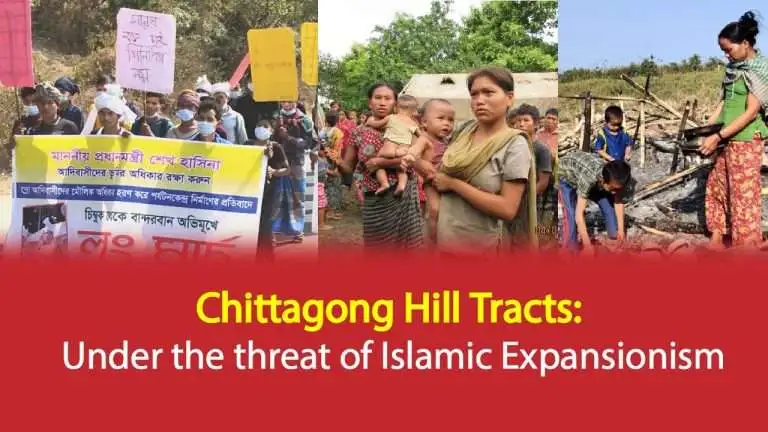
Asian Indigenous Peoples remain affected by unresolved conflicts linked to nation-building processes. Peace agreements between governments and Indigenous Peoples often remain unimplemented. One example is the continued non-implementation of the 1997 Chittagong Hill Tracts Accord in Bangladesh.
Recognition of Indigenous Peoples, including their territorial autonomy and right to internal self-determination, remains fundamental and should be protected through appropriate legal and constitutional frameworks. He urged to OHCHR to encourage Asian governments to take legal and constitutional protection measures of Indigenous Peoples.
Finally, Mr. Dhamai urged OHCHR to strengthen its field presence in Asia through increased resources and dedicated focal points on Indigenous Peoples’ rights, including the appointment of Indigenous professionals.