






Hill Voice, April 26, 2026 – Special Correspondent: Allegations have surfaced regarding the involvement of a syndicate—led by Abu Han Md. Ismail Saudagar—in the long-term, systematic depletion of community forests within the Mangu Mouza of Ward No. 9, Choikkhyong Union, in Alikadam Upazila of Bandarban District. It is further alleged that these illicit activities are being carried out with the collusion of certain officials of the Lama–Alikadam Forest Department. As a result of this widespread deforestation, local biodiversity in the affected area is now placed under serious threat.

According to local sources, the Bangjhiri stream serves as the primary source of drinking water for thousands of people from the Mro indigenous community, including residents of Pamia Mro Para, Tantui Para, Namchak Para, Kakoi Para and Adui Para. However, accessing water from the stream has become increasingly difficult. A large-scale deforestation operation is underway across more than 200 acres of forest land in the area. This forest hosts a wide variety of valuable timber species—locally known as “Lali” species—including Garjan, Champa, Koroi, Bailam, Gutgutia, and Chapalish.

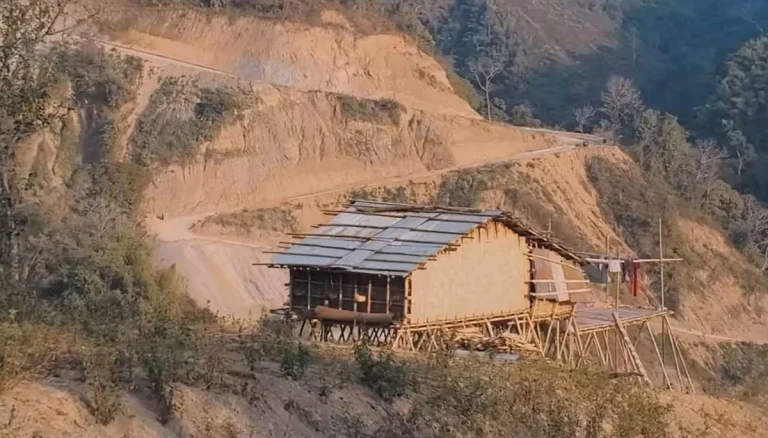
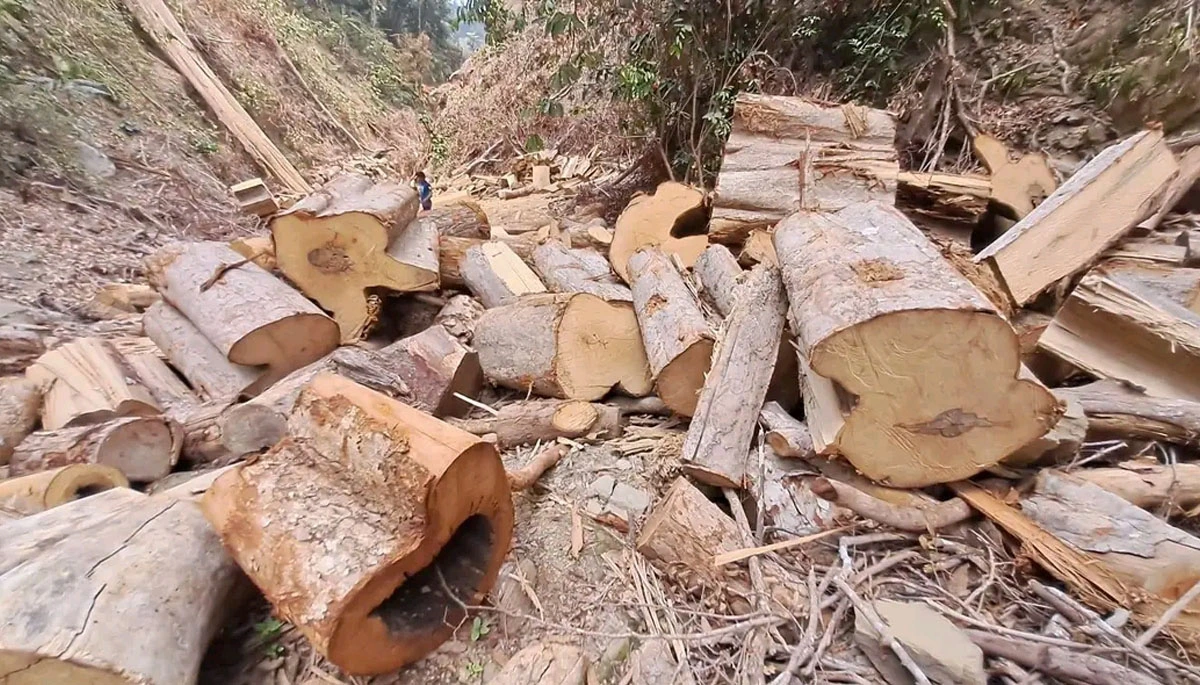
Reports indicate that the natural flow of the Pola Bangjhiri stream has been obstructed, while hillsides have been cut to construct roads suitable for truck movement. Large piles of timber logs of various sizes have been stacked along both sides of these roads, with logs measuring between 60 to 100 feet in length and 10 to 15 feet in diameter. Allegations suggest that for the past two years, the syndicate led by Abu Han Md. Ismail Saudagar—a timber merchant from the Panbazar area of Alikadam—has orchestrated this destruction using a workforce of around 30 laborers, in collusion with certain corrupt officials of the Lama–Alikadam Forest Department.
Furthermore, a portion of the felled timber is being smuggled to different parts of the country under the guise of legality by using “Jot Permit” issued by the Forest Department. The remaining timber is being sold as fuel to illegal brick kilns operating in Alikadam.
Kamplat Mro, the Karbari (community head) of Adui Para, stated that seven to eight different villages depend on water from the Bangjhiri stream. “We are currently facing a severe water crisis. Despite submitting complaints to the administration, we have received no response,” he said. Men Rao Mro of Namchak Para remarked, “Just two years ago, this area was filled with wildlife and birds, including deer and bears. Now, neither the forest nor the animals remain.” Men Chong Mro of Pamia Para added, “Earlier, the local stream (Jhiri) was filled with water, fish, and crabs. Now it has completely dried up, and we are facing an acute water shortage.”

Villagers further reported that more than one hundred Mro families across at least five hamlets—including Pamia Para, Tantui Para, Namchak Para, Kakoi Para, and Adui Para—as well as residents of Sangkrat Mro Para and Kuiring Mro Para in Rupasipara Union of Lama Upazila, depend on this forest and the Bangjhiri stream. For nearly two years, the region’s biodiversity has been severely threatened due to illegal hill-cutting for road construction, obstruction of natural water flow, and the felling of centuries-old “mother trees.” The road constructed by cutting large portions of hills is now being used regularly for transporting timber by trucks.
Following widespread protests and discussions on social media, the administration conducted a raid on April 22 in the Bangjhiri area of Pamia Para under Choikkhyong Union of Alikadam Upazila. During the operation, although the timber smugglers managed to flee, the excavator used in the operation was disabled and their temporary shelters were demolished.
In light of these developments, concerned citizens have raised serious questions. For the past two years, timber has reportedly been smuggled along the Alikadam–Thanchi road. Yet, despite the presence of extensive security forces in the Chittagong Hill Tracts—including the Forest Department, local administration, police, army, and BGB—no authority appears to have taken effective action. Checkpoints are present throughout the region, yet illegal timber smuggling has continued unchecked, raising concerns about oversight and accountability.
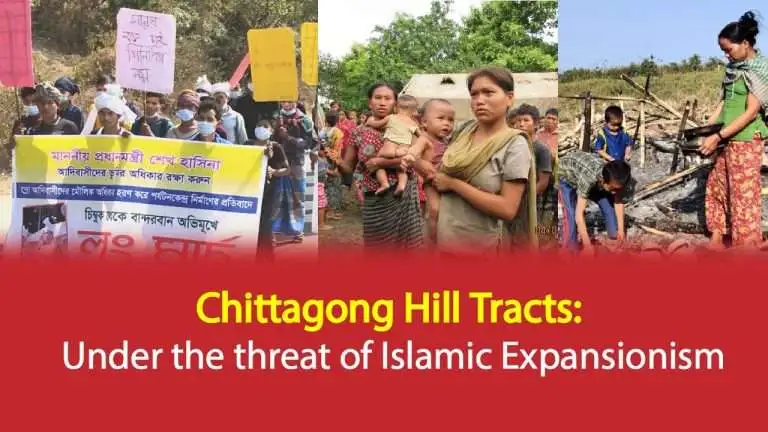
Notably, since 2015, the rapid expansion of tourism and communication infrastructure in the Chittagong Hill Tracts—combined with the activities of unscrupulous businessmen and syndicates—has placed increasing pressure on the environment. Incidents such as the eviction of local Jumma communities, hill-cutting for road construction, and illegal logging have increased significantly. As a result, environmental problems including soil erosion, drying of water sources, and loss of biodiversity have intensified. Consequently, the Jumma communities in the region continue to face serious challenges in protecting their land, environment, and cultural heritage.