





Hill Voice, 13 December 2025, International Desk: Unreprensented Nations and Peoples Organization (UNPO) submitted input to the United Nations Working Group on Business and Human Rights ahead of its thematic study on Indigenous Peoples’ Free, Prior and Informed Consent (FPIC), aiming to help States, businesses, and investors understand and fulfill their obligations in accordance with international standards on 10 December.
In the submission, UNPO emphasised the strong relationship between the right to self-determination and FPIC. UNPO argued that FPIC is not a mere procedural formality but a primary mechanism for communities to exercise self-determination, illustrating this through the case of the Chittagong Hill Tracts (CHT).
For unrepresented nations and peoples, the right to self-determination is not an abstract political principle; it is a lived reality, shaped by the ability to govern lands, protect cultural heritage, and sustain livelihoods.
FPIC is a vital mechanism through which this right is realised, operationalising peoples’ right to decide their futures, including the ability to refuse and maintain control over their lands and resources.
While FPIC is most clearly codified for Indigenous Peoples, its underlying principles are universally relevant. UNPO stresses that these protections must extend to all unrepresented peoples, addressing colonial legacies and ongoing dispossession.
In its submission, UNPO highlighted examples from Guam, the Chittagong Hill Tracts, Ogoniland, Balochistan, Tibet and West Papua, illustrating the repercussions of limiting self-determination and FPIC.
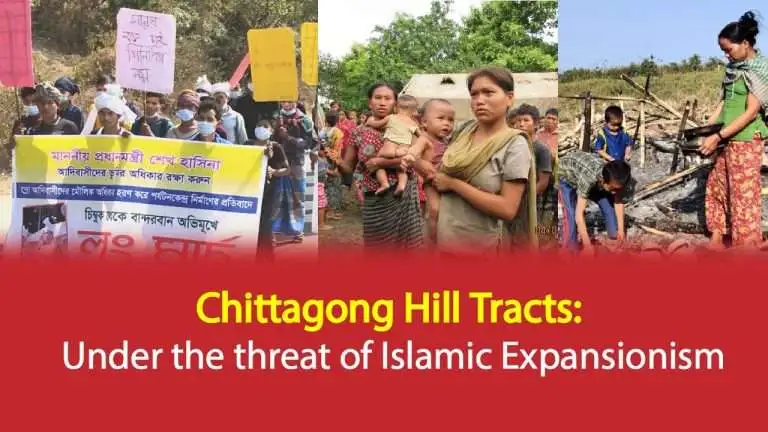
In the submission, UNPO said that Bangladesh’s 54 Indigenous communities face dispossession, repression, and criminalisation as large-scale development projects, military camps, tourism, and economic zones encroach upon their ancestral lands, particularly in the CHT.
A key example is the 2022 seizure of 3,500 acres in Bandarban District by the Lama Rubber Company, supported by security forces, which destroyed forests and crops, causing food and water shortages. The lack of FPIC mechanisms underscores how development is used to violate Indigenous and collective rights, mirroring widespread land grabbing.
The experiences of UNPO members are indicative of a consistent pattern. When peoples are systematically excluded from decision-making processes affecting their lands and resources, the consequences extend far beyond environmental harm.
They encompass the erosion of cultural identity, the destruction of traditional livelihoods, forced displacement, deepening divisions, and the perpetuation of historical exclusion.
For UNPO members, FPIC is inseparable from the right to self-determination and must be upheld by States, companies, and investors as a binding human rights obligation, not an optional gesture.