



Niranjan Chakma
The government in Bangladesh changes, but no positive change occurs regarding the political problems of the Chittagong Hill Tracts (CHT) or the human rights situation of the indigenous Jumma people residing there. Governments change with pledges of fresh reforms; responsibilities and authority shift across the various tiers of state power; and the Jumma people remain hopeful that their fortunes will take a turn for the better. However, the overall human rights situation in the CHT consistently continues to deteriorate.
Even after the interim government led by Nobel Peace Laureate Dr. Yunus-assumed power following the anti-discrimination student-people’s uprising in July-August 2024, with a pledge to enact positive state reforms and establish a non-discriminatory state system, the Jumma people had hoped that this administration would duly acknowledge the deprivation and oppression long imposed upon them and take sincere initiatives to implement the CHT Accord.
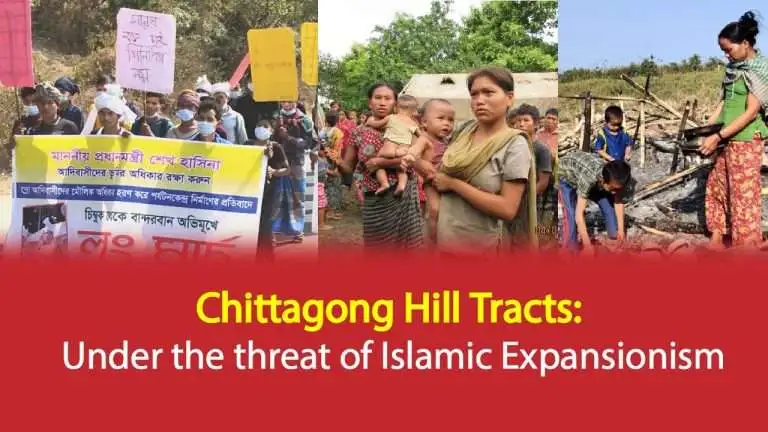
However, it soon became evident that this interim government, too, was no exception to its predecessors and lacked sincerity regarding the implementation of the CHT Accord. Moreover, within the brief span of just one and a half years of this government’s tenure, four major communal attacks were perpetrated against the Jumma people by Muslim Bengali settlers with the assistance of the army in Dighinala, Khagrachari, Rangamati, and Guimara.
These attacks resulted in the deaths of seven Jummas, injuries to over two hundred people, and the incineration of more than one hundred and fifty homes and shops. Under the interim government, much like the previous administration, various acts of repression and oppression against the Jumma people including human rights violations continued unabated. As has become the norm, no proper justice was seen to be ensured for these human rights violations-a persistent failure that invariably drives the human rights situation toward further deterioration.
Following the Parliamentary election held on February 12, 2026 in which it secured a two-thirds majority vote the Bangladesh Nationalist Party (BNP) formed the new government under the leadership of Tarique Rahman. Needless to say, in light of the country’s changed circumstances and the various forms of repression suffered during the tenure of the previous administration, the BNP is expected to draw lessons from the past and play a constructive role in the nation’s governance in the days ahead; it is with this very hope-that the BNP government would also approach the issue of the CHT with a correct and people oriented perspective that the majority of the Jumma people in the region cast their votes for the BNP in this election.
On February 17, 2026, following his oath-taking ceremony, Dipen Dewan elected from the Rangamati constituency was appointed as the Minister of the Ministry of CHT Affairs; an appointment that was consistent with the CHT Accord and highly anticipated. However, on that very same day, Mir Mohammad Helal Uddin a Member of Parliament elected from the Bengali community outside the CHT was appointed as the State Minister for the Ministry of CHT Affairs; a move that was completely inconsistent with the core spirit of the Accord and highly unwelcome. Although civil society across Bangladesh including that of the CHT demanded the removal of Mir Mohammad Helal Uddin from the Ministry of CHT Affairs, the government has taken no action in this regard.
Of even greater concern is the statement made by the new government’s Home Minister, Salauddin Ahmed, during a discussion on March 11, 2026, in which he asserted that ensuring 100 percent human rights in the CHT is not possible for the sake of preserving state integrity. He stated, “If we were to scrutinize every instance of human rights violation in the CHT, we would be unable to authorize our defense forces to take many of the actions they deem necessary.”
Needless to say, such remarks by the Home Minister could not only create obstacles to ensuring human rights in the CHT but also further embolden continued human rights violations. Consequently, such views expressed by the Home Minister can undoubtedly be regarded as deeply concerning for the human rights situation in the region.
It goes without saying that, regardless of which government holds state power, matters concerning the CHT remain entrusted to the military. In 2001, de facto military rule dubbed ‘Operation Uttoron’ was imposed upon the CHT. Under the aegis of ‘Operation Uttoron,’ the military exercises control over and manages all affairs within the region, including general administration, law and order, the judicial system, and development programmes. Irrespective of which government assumes state power in Bangladesh, every administration rather than seeking a political and peaceful resolution to the problems of the CHT through the implementation of the CHT Accord consistently pursues a policy of resolving the issue through extensive militarization and fascist-style repression.
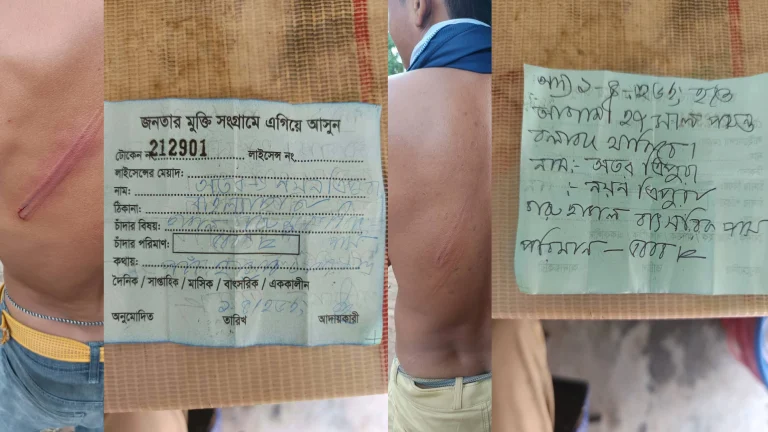
Following the formation of the BNP government, there has been no significant improvement in the human rights situation in the CHT. As in the past, various forms of oppression and human rights violations by security forces against the Jumma people have persisted; furthermore, acts of terror perpetrated by army-backed terrorist groups against supporters of the CHT Accord and innocent Jummas as well as attacks, harassment, land encroachment, and violence against Jumma women and girls by Muslim Bengali settlers and Rohingya terrorists, have continued unabated.
The military has incited Muslim Bengali settlers and fundamentalist groups to act against the CHT Accord. In this context, organizations such as the Parbatya Chattagram Nagorik Parishad (CHT Citizens’ Council) and the Parbatya Chattagram Sampriti Jote (CHT Harmony Alliance)- which are ultra-nationalist and extremist communal groups representing Muslim settlers are demanding the abrogation of the CHT Accord.
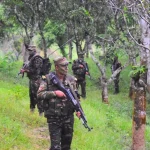
Meanwhile, following the assumption of power by the BNP government, a large-scale military operation led by the Bangladesh Army was conducted on March 16 in the Tanikkapara area of Taindong Union, under Matiranga Upazila in the Khagrachari Hill District. It is reported that during this military operation, members of the joint forces fired several rounds of mortar shells and bullets, targeting individuals in the neighboring areas who were supporters of the CHT Accord. This operation was carried out by the joint forces comprising personnel from the Army, the BGB, and the Ansar, under the command of Lieutenant Colonel Md. Masud Khan, Zone Commander of the Matiranga Army Zone, and Md. Faruq, an officer of the Matiranga Zone.
On March 27, the Bangladesh Army conducted another military operation in the Balukhali Union area, located within the Sadar Upazila of Rangamati District. This operation reportedly continued until April 1, 2026, during which a number of houses were searched and villagers were subjected to harassment. Moreover, on the evening of March 25, at Wagga Tanchangya Para located in Ward No. 4 of Wagga Union, Kaptai Upazila, Rangamati District more than 15 to 20 members of the Kukimara BGB Camp (operating under the Wagga-Kaptai 41 BGB Battalion) obstructed local Jumma villagers while they were transporting timbers under their private ownership.
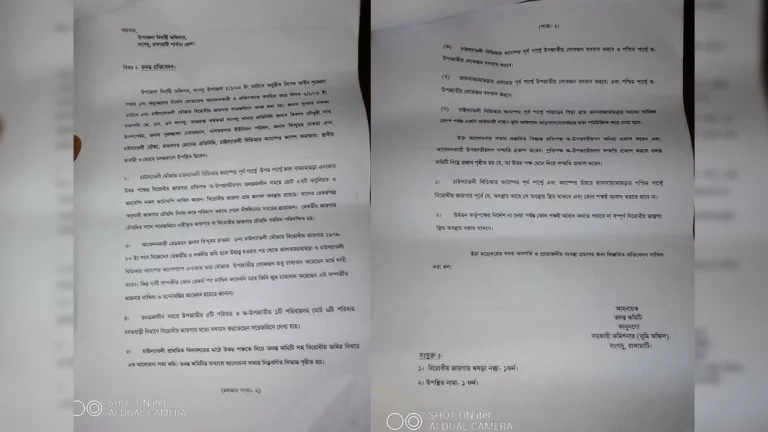
The forceful occupation of Jumma lands by Muslim settlers also continues unabated. For instance, on February 26, an attempt was made to seize the cremation grounds and homesteads belonging to 60 Tripura families in Mirinja Bagan Para, Lama Upazila.
Similarly, brutal violence against Jumma women and girls continues unabated. Allegations have surfaced regarding the rape of a mentally disabled Jumma girl (15) in Sajek, Baghaichari Upazila of Rangamati District, by a Bengali settler mechanic. In a village named Barobil within Manikchari Upazila of Khagrachari District, an indigenous housewife named Ramra Marma (41) was hacked to death. Furthermore, in a village named Fakirnala located within the Manichari Union of Manikchari Upazila an attempt was made by a Muslim settler to rape a Marma housewife.
Like the CHT region, persecution of minority Hindus continues in the plain districts of Bangladesh too. In the month following the parliamentary election, more than fifty incidents of communal violence took place across the country. These incidents of communal violence include killings, rapes, attacks on and looting of temples, attacks on homes and business establishments, and the forceful occupation of indigenous people’s homesteads.
In reality, while changes in the government and shifts in specific individuals within the administrative structure may bring about minor variations in the overall human rights situation, they fail to effect any fundamental or qualitative changes in state policy or the role of the government. Consequently even 54 years after independence and 28 years after the signing of the CHT Accord, which aimed to resolve the region’s long-standing crisis the human rights situation in the CHT has failed to improve, and a proper resolution to the conflict remains unassured. Due to the failure of both the state and the government to adopt firm and explicit policies specifically regarding the assurance of human rights in the CHT, the protection of the just rights of the region’s long-neglected indigenous Jumma people, and the resolution of the conflict through appropriate political and peaceful means the implementation of the CHT Accord has remained unrealized over the past 28 years; meanwhile, the human rights and political landscape in the region has undergone a continuous decline, reaching a currently extremely precarious state.
Needless to say, there is no alternative to the proper implementation of the CHT Accord the agreement that brought an end to over two decades of armed conflict, under which the Parbatya Chattagram Jana Samhati Samiti (PCJSS) laid down its arms to the government after stepping back from its armed struggle for the autonomy of the Jumma people, and which charted a path toward a political and peaceful resolution of the CHT issue if a sustainable solution to the CHT problem and an improvement in the human rights situation are to be achieved. The current government, too, must recognize this reality. The more the implementation of the CHT Accord is delayed, the more complex the situation in the CHT will become, and the human rights situation will inevitably be placed at risk.
Niranjan Chakma: Eminent Poet and Cultural Activist.