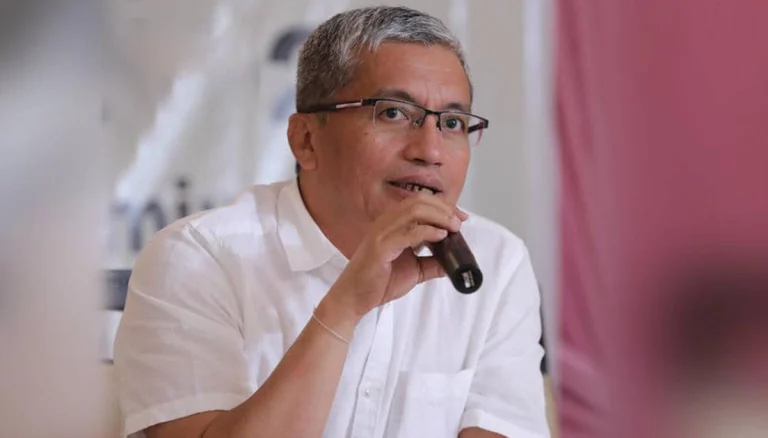
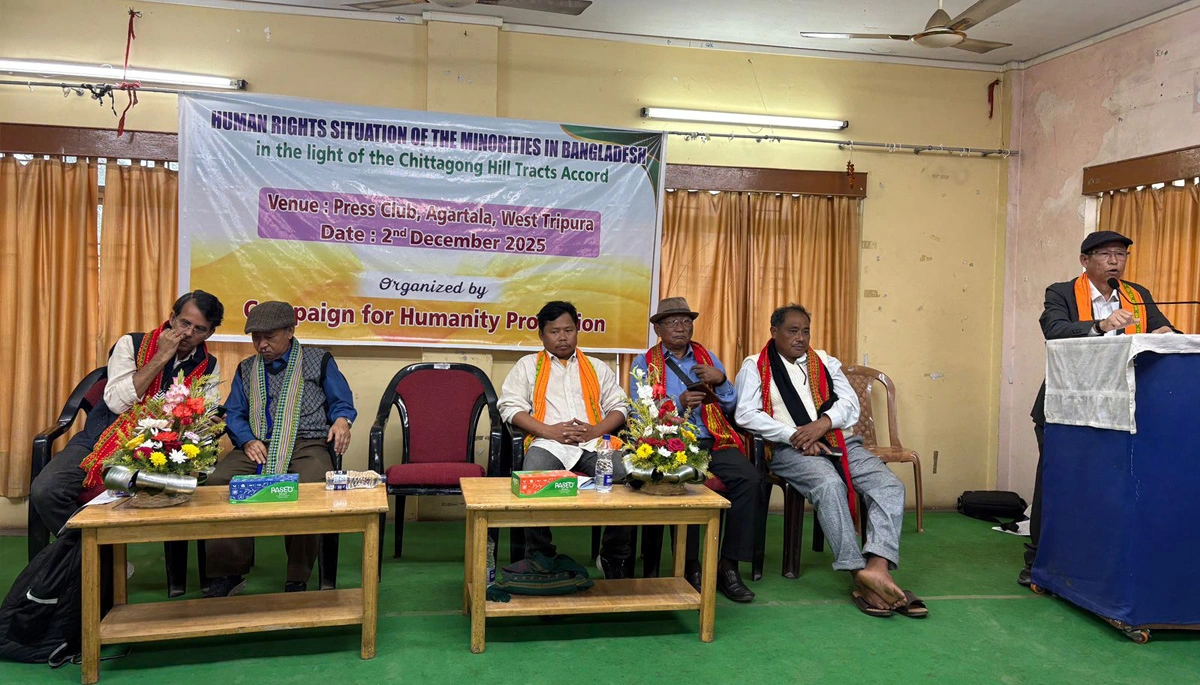
Hill Voice, 2 December 2025, International Desk: A discussion meeting titled ‘Human Rights Situation of the Minorities in Bangladesh in the Lights of Chittagong Hill Tracts (CHT) Accord’ has been organized at the Agartala Press Club on Tuesday (2 December 2025) at the initiative of Tripura-based human rights organization ‘Campaign for Humanity Protection (CHP).
The discussion meeting was presided by CHP President Niranjan Chakma, a prominent writer and litterateur while CHP Secretary Priyo Lal Chakma moderated the discussion. The discussion meeting was attended by Pinaki Das, Assistant Editor of Northeast Live News Channel, eminent researcher Dr. Shyamal Bikash Chakma, former BAC Chairman Bipanshu Chakma, President of International Chakma Foundation Pragati Chakma, eminent social worker and CHP Vice-President Nayan Jyoti Tripura.
Pinaki Das, assistant editor of North-East Live News Channel, said, there is no reason to remain silent if a fire breaks out in the neighboring house. Because that fire will also affect your own house. If there are negative changes in the neighboring country, it will also affect your own country. Therefore, we have to think about the CHT. Human rights violations are happening in the CHT, which is very worrying for us. Therefore, we have to support the tribal movement in the CHT.
Dr. Shyamal Bikash Chakma, a researcher at the Tata Institute of Social Sciences, said, the people of India have a responsibility regarding the CHT. The delicate human rights situation in the CHT is not only a matter of the CHT, it is also related to the security of India. Therefore, the people of India have to play their role in the implementation of the CHT Agreement and the human rights situation.
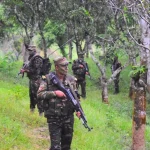
Pragati Chakma said, the 1900 Regulation was the protection of the Jumma people in the CHT. The Bangladesh government continues to violate it. In addition, in the name of military operations against the Jumma people of the CHT, inhumane activities such as beatings, arrests, harassment, sexual violence, etc. are being carried out in the Jumma-inhabited areas. We know that on December 2, 1997, an agreement was signed with the Parbatya Chattagram Jana Samhati Samiti and the Government of the People’s Republic of Bangladesh for the purpose of peace. The people of the CHT assumed that peace would return through this agreement. But after the government implemented some parts of the agreement, it was no longer possible because the remaining important clauses were not implemented. He made a strong demand to the Bangladesh government that all temporary army camps in the CHT should be withdrawn, settler Bengalis should be removed from the CHT as per the CHT Agreement, and all false cases should be withdrawn. We all have to protest unitedly against the human rights violations in the CHT.
Bipanshu Chakma said, if a nation wants to survive with dignity, everyone has to be united. If any nation is unjustly oppressed, then there should be compassion for those who are better off elsewhere. We know that a peace agreement was signed with the Bangladesh government on December 2, 1997. But unfortunately, the agreement was not implemented to the extent that it was supposed to be implemented. He demanded the full implementation of the agreement from the Bangladesh government without delay.
Nayan Jyoti Tripura said, today marks 28 years since the agreement signed between the Parbatya Chittagong Jana Samhati Samiti and the Government of the People’s Republic of Bangladesh in 1997. Today was supposed to be celebrated with great enthusiasm. This agreement was signed for the liberation of the oppressed people of the CHT for ages. But sadly, it has to be said that even after 28 years, the government has not shown any will to implement that agreement.
Niranjan Chakma said that even after the formation of independent Bangladesh, the misfortune of the people of the CHT still haunts them. The oppression of the people of the CHT has not stopped. He expressed the opinion that the difficult times of the indigenous people of the CHT began from August 17, 1947. Because on that day, 98 percent of the non-Muslim population was included in Muslim-dominated Pakistan. That is why the Chakmas observe August 17 as Chakma Black Day. He demanded that the Bangladesh government implement the Hill Tracts Accord without delay.
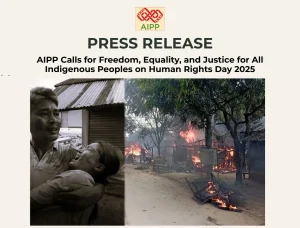
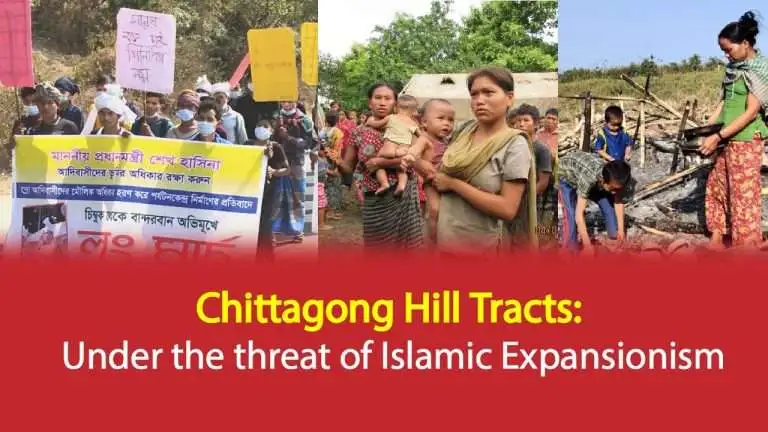
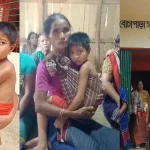
In his welcome speech, Priyolal Chakma said that communal attacks on religious and ethnic minorities and indigenous people, vandalism of houses and businesses, arson and looting, brutal killings, arrests, etc. continue in the CHT of Bangladesh. Currently, the human rights situation in the CHT is the most delicate. The army is carrying out inhumane activities such as military operations, arbitrary arrests, house searches, extrajudicial killings, land grabbing and eviction and settlement of Muslim settlers in all corners of the CHT.
With the aim of finding a political solution for the indigenous peoples in the CHT, the historic CHT Accord was signed by the Government of the People’s Republic of Bangladesh with the Parbatya Chittagong Jana Samhati Samiti, a political organization of the CHT. Even after 28 years of that agreement, the basic points of the agreement have not been implemented.
After the interim government under the leadership of Dr. Yunus came to power, in September and October 2024, the army and Muslim settlers attacked the indigenous Jumma people in Khagrachhari, Rangamati, and Dighinala. In this, four Jummas were killed and more than a hundred houses were burned. In continuation of this, on September 27 and 28, 2025, the army and Muslim settlers attacked Khagrachari and Guimara. In this attack, three Jumma youths were killed in army firing and more than a hundred Jumma houses were burned in the presence of the police and the army.
Finally, he proposed to exert political and diplomatic pressure on the Bangladesh government to implement the CHT Agreement and stop human rights violations; to develop public opinion by highlighting the CHT issue in the Indian media and to strengthen propaganda and public opinion formation worldwide; and to provide all-out support to strengthen the ongoing movement of the Jumma people.